What is Positive Slippage?
Let’s dive into Positive Slippage and how it can benefit your trades!
Let’s dive into Positive Slippage and how it can benefit your trades!
Introduction
Slippage is a phenomenon that occurs when the price at which a trade is executed differs from the expected price. This discrepancy is primarily due to rapid price changes between the time an order is placed and the time it is executed. Considering the crypto arena remains more volatile compared to other financial markets, slippage is a common issue in fast-moving markets and can significantly impact trading outcomes. It is a critical concept for traders to understand as it affects all trading strategies, not just those in volatile markets.
Understanding slippage is vital for traders because it directly affects the profitability of trades. When slippage occurs, it can lead to unexpected costs and reduced profits. By comprehending the causes and effects of slippage, traders can develop strategies to mitigate its impact, ensuring more accurate execution of trades and better financial outcomes.
Slippage in Finance
Slippage happens when there is a difference between the expected price of a trade and the actual execution price. Several factors, including market volatility, order size, and the type of order placed, can cause this. For example, in highly volatile markets, prices can change rapidly, increasing the likelihood of slippage. Additionally, large orders can cause slippage if there isn’t enough liquidity to fill the order at the expected price.
Market orders are designed to be executed immediately at the best available price, which can change quickly, leading to slippage. Limit orders, on the other hand, are set to execute at a specific price or better, reducing the risk of slippage but not guaranteeing that the order will be filled. Choosing the right type of order depends on market conditions and trading strategy to manage slippage effectively.
Market volatility refers to the speed and extent of price changes in the market. During periods of high volatility, prices can swing dramatically within short periods, increasing the risk of slippage. Traders need to stay aware of market conditions and adjust their trading strategies accordingly to minimize the impact of volatility on their trades. It is important to learn Arbitrage and DeFi dynamics in order to turn this phenomenon into a trading strategy and generate returns.
Arbitrage in Trading
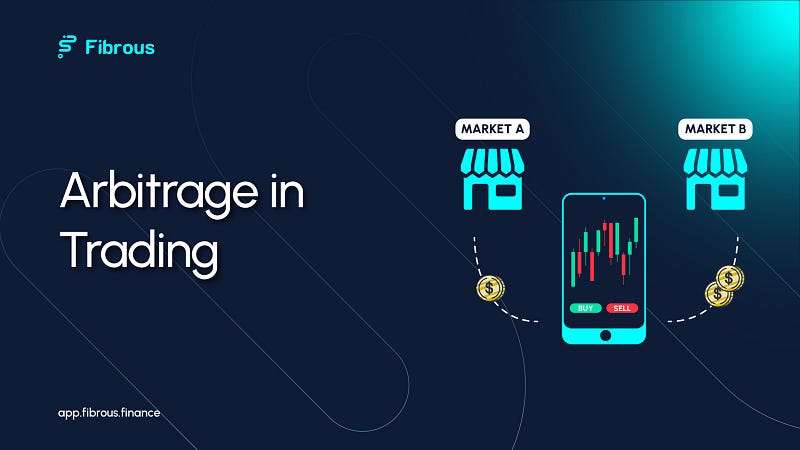
Arbitrage is a trading strategy that involves buying an asset in one market where the price is lower and simultaneously selling it in another market where the price is higher. This exploits the price differences between markets for a profit. Successful arbitrage requires quick execution and precise calculations to capture these small price differences. For instance, even minor price differences can be profitable if executed rapidly.
Slippage can erode the small profit margins typically found in arbitrage opportunities. Since arbitrage relies on exploiting minor price discrepancies, even slight slippage can turn a profitable trade into a loss. Therefore, managing slippage is crucial for arbitrage traders to maintain profitability.
Liquidity Pools
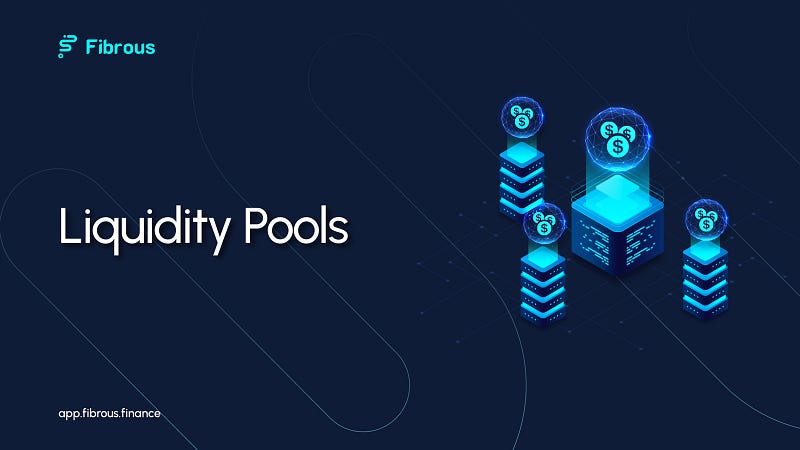
In DeFi, the liquidity pools in AMM strategies for market making are essentially open to dynamic changes and susceptible to slippage. Liquidity pools are a fundamental component of decentralized finance (DeFi) platforms. They allow users to trade assets without relying on traditional order books or intermediaries. Instead, users provide liquidity to a pool and earn fees from trades that occur within the pool. This system ensures continuous liquidity, enabling smoother and more efficient trading.
Uniswap V2
Uniswap V2 uses a constant product formula (x * y = k) and distributes liquidity uniformly across the entire price range. Liquidity positions are represented by ERC20 tokens, and all liquidity providers (LPs) share the same exposure to the price movements across the full range. This means that a large portion of the liquidity is often underutilized, leading to inefficiencies, especially when there are significant price changes.
Uniswap V3
Uniswap V3 introduces a revolutionary concept known as concentrated liquidity. Here, LPs can allocate liquidity within specific price ranges, allowing for more efficient use of capital. Liquidity positions in V3 are non-fungible and represented as NFTs, enabling LPs to customize their liquidity provision according to market conditions. This targeted allocation means that the same amount of liquidity can support much larger trading volumes, reducing slippage and enhancing capital efficiency.
In liquidity pools, slippage occurs due to changes in the pool’s asset balance when trades are executed. When a large trade is made, it can significantly alter the ratio of assets in the pool, leading to a change in the price of those assets. This price change between the initiation and execution of a trade results in slippage, which can impact the profitability of the trade.
The depth of liquidity in a pool refers to the total amount of assets available for trading. Deeper liquidity means there are more assets in the pool, which can absorb larger trades with minimal price impact, thus reducing slippage. Conversely, shallow liquidity leads to higher slippage, as large trades cause more significant price changes within the pool.
Large trades have a more pronounced effect on the balance of assets in a liquidity pool, resulting in greater slippage. Traders making large transactions need to be aware of this impact and plan their trades accordingly to minimize slippage. This might involve splitting large trades into smaller ones or timing trades to coincide with periods of higher liquidity, ensuring more stable prices and better trade execution.
In Uniswap V2, the uniform distribution of liquidity often results in higher slippage for large trades as the entire price range must absorb the impact. In contrast, Uniswap V3’s concentrated liquidity allows large trades to be executed within specific price ranges with deeper liquidity, thereby reducing slippage significantly.
Positive Slippage
Fibrous play a crucial role in managing slippage. We’re aggregating liquidity from multiple sources, providing traders with better price execution and reducing the risk of slippage. By routing orders through the most efficient paths, Fibrous ensure that traders receive the best possible prices, minimizing the impact of slippage on their trades.
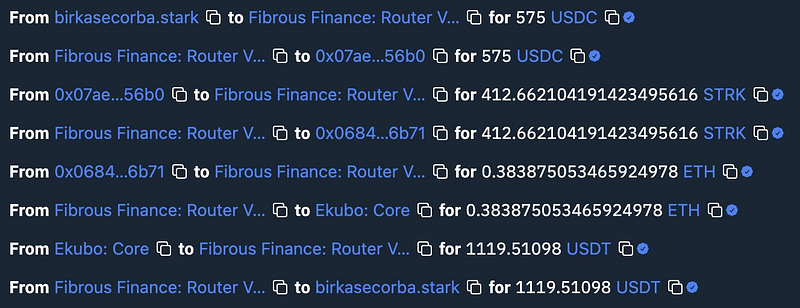
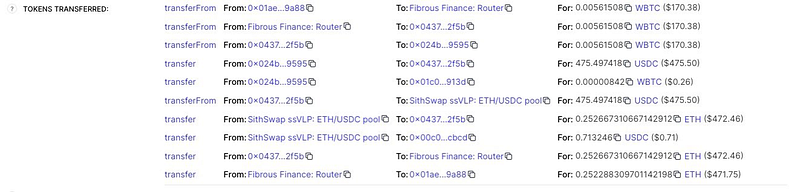
Positive slippage occurs when a trade is executed at a better price than expected. In the context of the above swap transactions, we can define positive slippage as follows:
When a user swaps a certain amount of USDC or other crypto assets for another asset and ends up receiving more of the desired asset than initially anticipated, this is an example of positive slippage.
For instance, if a user swaps 575 USDC, valued at 575 USD, and receives more STRK or ETH than expected, this indicates positive slippage.This favorable outcome enhances the profitability of the trade, as the user ends up with a greater amount of the asset than initially projected.
This beneficial result can be attributed to several factors such as improved market conditions, increased liquidity, or better-than-expected price execution during the trade. Positive slippage reduces trading costs and increases profitability for traders.
Thanks to the power of Fibrous, positive slippage becomes more achievable. Fibrous aggregates liquidity from multiple sources, ensuring that traders receive the best possible prices and optimal trade execution. By efficiently routing orders through the most favorable paths, Fibrous minimizes the impact of negative slippage and maximizes the potential for positive slippage, thereby enhancing the overall trading experience and outcomes for its users.
In traditional finance, positive slippage might occur during periods of low volatility or when there is ample liquidity for a particular asset. In DeFi, positive slippage can happen in well-balanced liquidity pools or during favorable market movements. For example, in a DeFi trading pair with high liquidity and low trading activity, traders might experience positive slippage when their orders are filled at better prices.
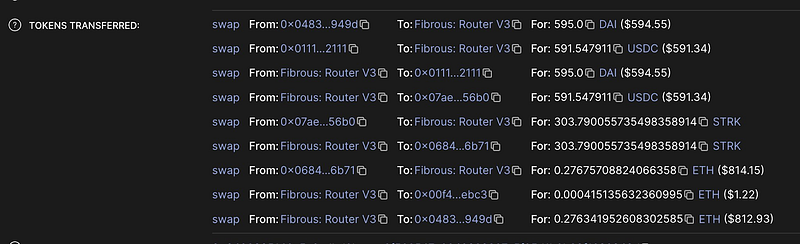
Positive slippage offers several benefits for traders, including improved trade execution and increased profitability. By understanding and leveraging positive slippage, traders can optimize their trading strategies to take advantage of favorable market conditions. This enhances overall trading performance and helps achieve better financial outcomes.
Conclusion
Slippage is a critical concept in trading, impacting the execution prices of trades. Understanding the mechanisms behind slippage, the tools to manage it, and the role of platforms like Fibrous in reducing its impact is essential for traders. Additionally, recognizing the potential of positive slippage can lead to better trading outcomes.
Positive slippage can significantly enhance trading profitability. By understanding how and when positive slippage occurs, traders can adjust their strategies to maximize its benefits. This involves staying informed about market conditions, using appropriate order types, and utilizing advanced trading tools.
Fibrous offers valuable solutions for managing slippage and improving trade execution. By aggregating liquidity from multiple sources, these platforms provide traders with better prices and reduce the risk of negative slippage. Utilizing such tools can optimize trading experiences and lead to more successful trading outcomes.
Together, we will shape the future of decentralized finance.
Get in touch with us
Website: fibrous.finance
Twitter: Fibrous
Discord: Fibrous
Mail: support@fibrous.finance